
.png?w=1000&h=600)
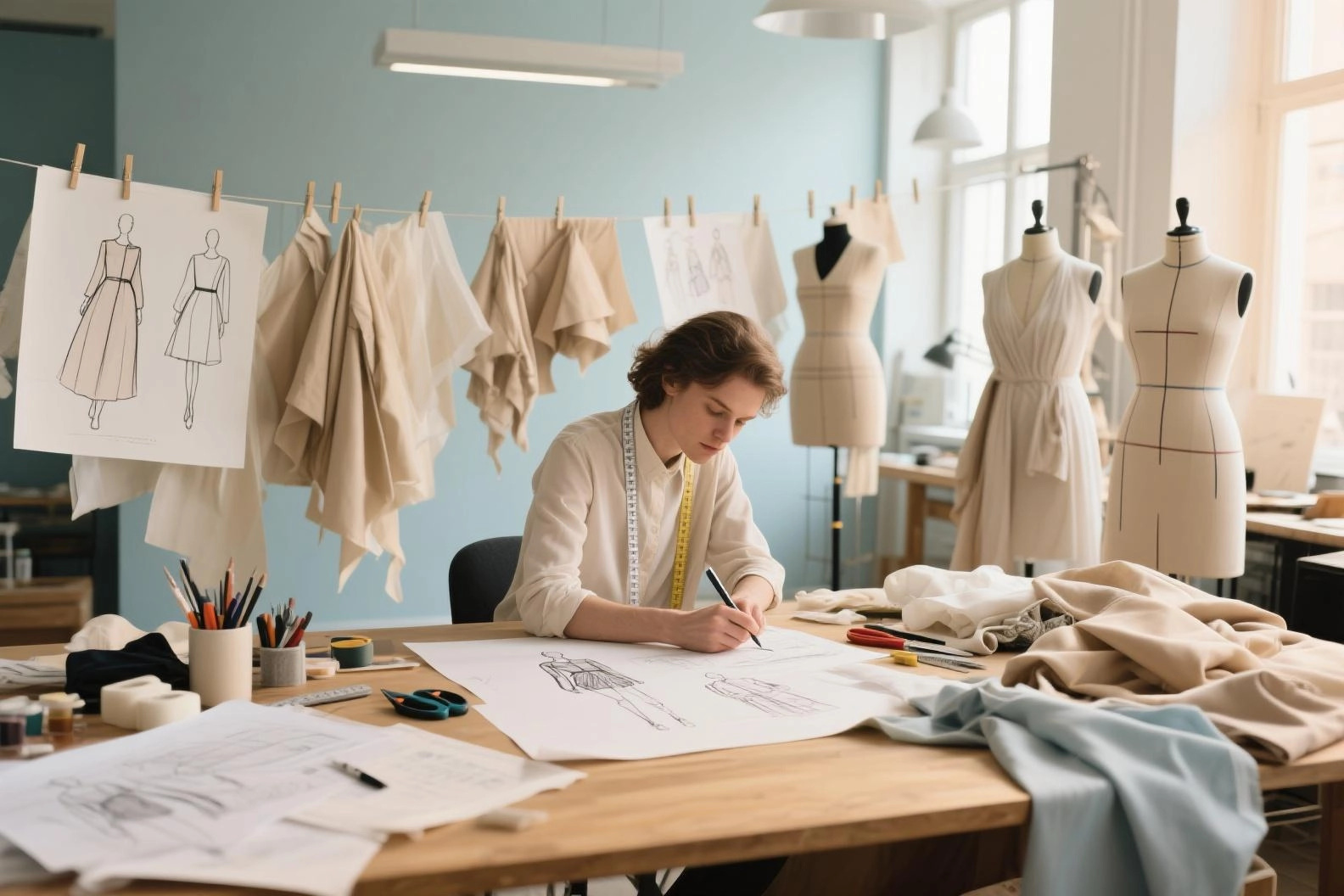
When it comes to fashion designers, many people think of the glamorous runways under the spotlight, but this is just the tip of the iceberg of their profession. A true fashion designer is a "dream maker" who uses creativity as a pen and fabric as paper to weave fashion dreams from the mundane details of daily life.
Their work begins with capturing inspiration. It could be an old coat worn by a street pedestrian, a classical oil painting in a museum, or even the luster of dewdrops on leaves in the early morning, all of which can serve as the starting point for design. Designers will jot down these scattered inspirations in sketchbooks and then repeatedly revise the sketches, carefully considering every detail from the arc of the neckline to the length of the skirt hem. For instance, when designing a dress, one should first determine whether the style is retro or minimalist, and then match the corresponding fabric - if you want a gentle look, choose a flowing chiffon; if you want a crisp look, use a cotton blend. The choice of fabric directly affects the final effect.
The next part that tests one's patience the most: pattern making and sample garment production. Designers need to transform two-dimensional drawings into three-dimensional clothing, and this step cannot do without precise size calculation. Sometimes, a sample garment needs to be revised more than ten times to meet expectations. This might be due to the incorrect Angle of the sleeves or the inappropriate tightness of the waist. There was once a designer who, in order to recreate the buttonding technique of a retro cheongsam, specially sought advice from experienced artisans and practiced repeatedly for half a month before mastering the trick.
In addition to creativity and craftsmanship, designers also need to keep up with market demands. They need to study the latest trends, but they should not blindly follow them. They should strike a balance between fashion and practicality. For instance, when designing commuter wear, it is necessary to incorporate the popular colors of the season while ensuring that the fabric is comfortable and the silhouette is slimming, making it convenient for office workers to carry out their daily activities. At the same time, cost control should also be taken into account. Although expensive fabrics are good, if they exceed consumers' budgets, no matter how beautiful the design is, it will be difficult to enter the lives of the general public.
This job is full of challenges. Staying up late to revise plans and failing to make sample clothes are common. But when seeing one's designs worn by models on the runway or by ordinary people to exude confidence, all the hard work turns into a sense of achievement. Fashion designers are not only transmitters of fashion but also "magicians" who empower people with clothes - a well-fitting piece of clothing can make a person with low self-esteem become cheerful and make a busy person feel the refinement of life.
If you also yearn to change your outfit with creativity, perhaps you can start by trying to match the clothes around you. For those who remain steadfast in their design positions, every needle and thread weaves a story about beauty and dreams.